

Pregnancy Loss Therapy for Black Women
Losing a pregnancy is not just a medical event. It is a loss of a baby, a future, and sometimes a piece of yourself. That grief is real, it is valid, and it deserves real support.
Understanding Pregnancy Loss
Pregnancy Loss in Black Women: Grief That Runs Deep
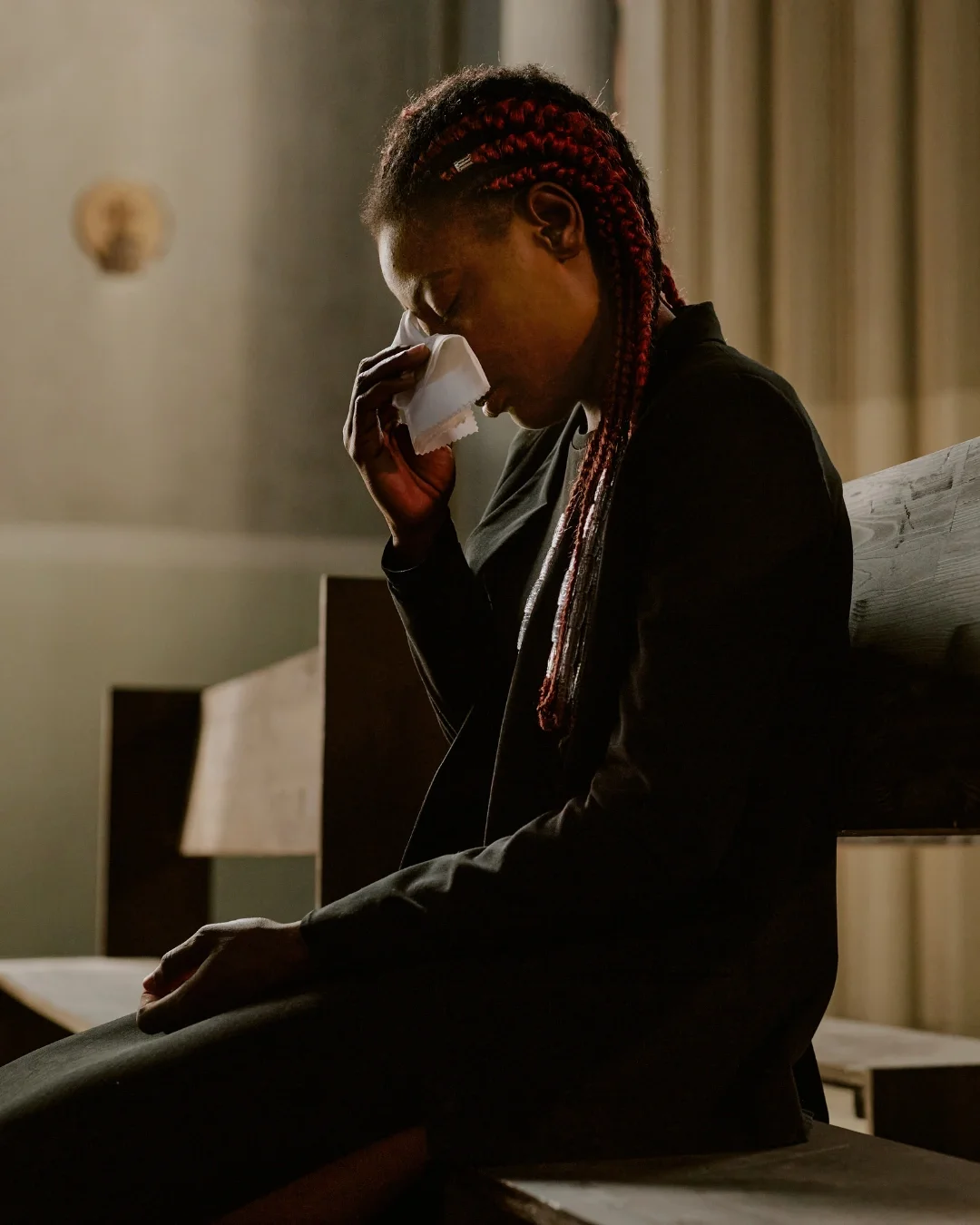
"Your grief is not too much. It is not dramatic. It is the exact size of the love you already had for your baby before you ever got to meet them."
Pregnancy loss, whether through miscarriage, stillbirth, or loss shortly after birth, is one of the most painful experiences a person can go through. The grief is real regardless of how far along you were. The love was real before the loss, and that matters.
For Black women, that grief is often compounded by layers that most people never address. There is silence around pregnancy loss in many communities. The pressure to stay strong for everyone else. The medical dismissal that may have happened before, during, or after the loss. The spiritual questions that do not have easy answers.
Many Black women describe feeling like their grief is invisible. Like they are expected to move on quickly. Like no one around them fully understands the size of what they lost. That isolation makes grief harder to carry and harder to heal.
At BGMHC, pregnancy loss therapy for Black women starts with one truth: your grief deserves space. Not just a little space. All the space it needs. For as long as it needs it.
Recognize the Signs
What Grief After Pregnancy Loss Can Look Like
Waves of Sadness That Come Without Warning
Grief that arrives unexpectedly, triggered by a due date, a baby shower invitation, a stranger's pregnancy announcement, or simply a quiet moment alone when there is nothing to distract from the loss.
Guilt and Self-Blame
The painful belief that something you did or did not do caused the loss. "My body failed my baby." "I should have known something was wrong." These thoughts are almost never true and almost always present. CBT directly addresses this pattern.
Anger at Your Body, Providers, or God
Rage that has nowhere to go. Anger at the medical system that may have failed you, at a body that did not do what it was supposed to do, or at a God you were told would protect you. All of it is a valid part of grief.
Emotional Numbness or Disconnection
Feeling nothing when you expect to feel everything. Going through the motions of daily life while internally shut down. The numbness that comes when the grief is too large to feel all at once.
Isolation and Withdrawal
Pulling away from family, friends, and community. Avoiding people who are pregnant or have new babies. Feeling like no one around you fully understands what you lost or how to be with you inside it.
Anxiety About Future Pregnancies
Fear of trying again. Dread about going through another loss. A hypervigilance around pregnancy that makes it impossible to feel safe or hopeful. Pregnancy after loss therapy offers dedicated support for this specific fear.
Physical Symptoms of Grief
Fatigue, loss of appetite, chest heaviness, headaches, or a body that feels different after the loss. Grief is not just emotional. It lives in the body, and the body needs support too.
Spiritual Conflict or Questions
Loss that shakes your faith, leaves you questioning God, or creates distance from a spiritual community that does not know how to hold your pain. Faith-based therapy creates space for all of those questions without judgment.
Grief after pregnancy loss does not follow a script. It can show up in ways that are unexpected, contradictory, and hard to name. These are the signs that often go unrecognized or untreated in Black women.
Why Black Women Face Unique Challenges After Pregnancy Loss
Pregnancy loss is painful for any parent. For Black women, the grief is compounded by specific cultural, systemic, and relational factors that make healing harder to access and harder to sustain.

Medical Racism and Dismissal
Symptoms minimized before the loss. Warning signs are not taken seriously. Grief was dismissed after. For many Black women, the medical system was part of the harm, which makes it even harder to trust that same system for support afterward.
Cultural Silence Around Loss
Many Black communities do not talk openly about miscarriage or stillbirth. The silence is not malicious. It is protective. But it leaves grieving women feeling invisible, isolated, and like something is wrong with them for not being able to move on.
The Strong Black Woman Expectation
The cultural pressure to appear strong, to hold it together for the family, and to grieve privately and quickly. This expectation does not protect Black women. It delays healing, deepens isolation, and makes it harder to ask for the support that is genuinely needed.
Higher Rates of Pregnancy Loss
Black women experience higher rates of miscarriage and stillbirth than white women, driven by systemic factors including chronic racial stress, medical bias, and disparities in prenatal care. The loss itself is more common, and the support is less available.
Spiritual Conflict
Loss can shatter the belief that faith is enough protection. For Black women who have been told "everything happens for a reason" or "God needed another angel," the grief can become complicated by spiritual questions that have no easy answers and no safe space to ask them.
Partner and Relationship Strain
Partners grieve differently and often without the same cultural permission to express that grief openly. This can create distance, miscommunication, and relational strain at the exact moment when connection is most needed. Couples therapy can help navigate that together.
Is Healing Possible After Pregnancy Loss?
Yes. Healing does not mean forgetting. It does not mean the loss stops mattering or that you stop thinking about the baby you lost. Healing means the grief softens enough that it no longer runs your entire life. It means being able to hold the loss without being consumed by it.
Grief has no timeline. A miscarriage from six months ago and a stillbirth from six years ago both deserve support. There is no version of this where you have waited too long or where the loss was too small to count.
Pregnancy loss therapy for Black women in California and Georgia starts with one commitment: your grief will be taken seriously here. Not managed or minimized. Do not rush toward acceptance before you are ready. Given the full weight it deserves by a therapist who understands the cultural, spiritual, and relational dimensions of what you are carrying.
What Pregnancy Loss Therapy at BGMHC Actually Looks Like
You do not need to be ready to talk through every detail. You just need to show up. Here is what the process looks like from the moment you reach out.
-

Space Before Story
Getting Started
Grief therapy does not begin by immediately asking you to recount the loss in detail. Your therapist builds a safe, consistent space first. You set the pace. You decide what you share and when. Nothing is required before you are ready.
-

Grief Work That Goes All the Way
The Approach
Your therapist uses approaches that work specifically for grief and pregnancy loss including EMDR, CBT, IPT, and faith integration when relevant. The approach is tailored to you, not applied from a generic grief protocol.
-

Carrying It Differently
What Progress Looks Like
The grief does not disappear. But it becomes something you can carry rather than something that carries you. You find moments of rest, of genuine connection, of being able to hold your baby's memory with love rather than only with pain.
Online Pregnancy Loss Therapy in California
Pricing, Insurance, and Access
We provide pregnancy loss therapy for Black women throughout California and Georgia, with clinicians licensed in both states. Secure virtual sessions allow you to access culturally affirming grief support from the privacy of your home, whether you are in Los Angeles, Long Beach, Oakland, Atlanta, or anywhere across either state. We accept multiple insurance plans and offer self-pay options. Therapy vouchers are available for eligible Black women who are pregnant or within one year postpartum. Book a free consultation, and we will walk you through everything before your first session.











Online Therapy
HIPAA-compliant telehealth sessions available across California and Georgia.

Flexible Scheduling
Appointment times built around your actual life, not an ideal one.

Insurance & Self-Pay
We accept major insurance plans and offer self-pay options to make care as accessible as possible.
Meet Our Therapists for Pregnancy Loss
Our therapists use evidence-based approaches tailored to the full context of your life. Not generic strategies, but tools that account for who you are and what you are carrying. Our clinicians are licensed in California and Georgia, perinatal mental health trained, and deeply committed to culturally affirming grief support. You will not have to justify the size of your loss before they can understand it.
-

Breea Wainwright
Licensed Marriage and Family Therapist, PMH-C
Breea specializes in perinatal grief and loss for Black mothers, supporting women through miscarriage, stillbirth, and the emotional complexity of pregnancy after loss. She holds space for all of it without rushing you.
MEET WITH BREEA -

Dr. Chyna Hill
Licensed Clinical Social Worker, PMH-C, EMDR Certified
Dr. Hill offers EMDR intensives for Black women who want to process the trauma of pregnancy loss more efficiently. Concentrated, high-impact sessions for those ready to go deep.
REQUEST AN INTENSIVE -

Chantal Austin
Licensed Clinical Social Worker, PMH-C
Chantal provides trauma-focused grief therapy including EMDR for Black women whose pregnancy loss carried traumatic elements including emergency procedures, medical dismissal, or stillbirth. Relief without requiring you to relive every detail.
MEET CHANTAL -

Ebony Staten
Associate Marriage and Family Therapist, APCC
Ebony works with Black women and couples navigating pregnancy loss, grief, partner communication breakdowns, and the relational strain that often accompanies loss. She helps clients grieve together rather than alone.
MEET EBONY
Frequently Asked Questions About
Pregnancy Loss Therapy for Black Women
-
Yes. We provide pregnancy loss counseling for Black women in California and Georgia through secure virtual therapy sessions.
If you are searching for:
Pregnancy loss therapist near me
Miscarriage counseling in California
Black therapist for pregnancy loss in Georgia
Support after stillbirth near me
Our clinicians specialize in perinatal mental health and understand the unique emotional, cultural, and relational impact of miscarriage, stillbirth, infertility loss, and termination for medical reasons.
Pregnancy loss can bring grief, guilt, anger, numbness, and isolation. You do not have to navigate that alone. Our therapy services are culturally responsive and trauma informed, centering the lived experiences of Black women and mothers.
-
No — you control what you share. Many therapies we offer can help without revisiting every detail.
-
Yes — grief has no timeline, and healing is possible at any stage.
-
The cost of pregnancy loss therapy in California varies depending on whether you are using insurance, private pay, or qualifying for sponsored services.
At Black Girls Mental Health Collective:
We offer private pay options
We offer free therapy options for eligible clients through sponsored programs and grant funded initiatives
We are committed to increasing access to maternal mental health support for Black women. If cost has been a barrier, we encourage you to explore our free therapy options to see if you qualify.
Many clients use insurance for perinatal mental health treatment, including therapy for miscarriage, postpartum depression, and pregnancy related anxiety.
If you are searching for:
Affordable pregnancy loss therapy in California
Insurance covered miscarriage counseling
Black therapist that accepts insurance near me
We encourage you to contact us to verify your benefits, discuss payment options, or learn more about our free therapy programs.
-
Yes — we accept multiple insurance plans in California and Georgia. These include: United Healthcare (Optum), Oxford (Optum), United Healthcare Medicare Advantage, Anthem Blue Cross California, Anthem EAP (Bank of America), Blue Shield of California, Carelon Behavioral Health, Magellan, Blue Cross Blue Shield of Massachusetts, Quest Behavioral Health, Aetna, Horizon Blue Cross and Blue Shield of New Jersey, Independence Blue Cross Pennsylvania, and Cigna. We also offer therapy vouchers for eligible Black women currently pregnant or within one year postpartum.
-
Yes — we can include partners in sessions if desired.
-
Yes. We offer online pregnancy loss therapy throughout California and Georgia.
Virtual therapy allows you to receive support from the privacy of your home, which can be especially helpful during grief, physical recovery, or postpartum healing.
If you are searching for:
Online miscarriage therapy in California
Virtual pregnancy loss counseling in Georgia
Telehealth therapy for pregnancy loss near me
Our virtual model ensures access to culturally responsive care without needing to travel.
Because therapy must be provided in the state where you reside, services are currently available to residents of California and Georgia based on clinician licensure.
Still have questions?
Our team is happy to talk through anything before you book.
Related Support
Pregnancy Loss Often Connects to Other Areas of Care

Take the Next Step
Your grief is not too much.
You just need someone who can hold it with you.
Culturally affirming pregnancy loss therapy for Black women in California and Georgia. Licensed therapists who understand what you are carrying. Virtual sessions. Free consultation.