How to Find Support Groups for Black Mothers Navigating Motherhood
Motherhood shifts everything at once. Your identity, your relationships, your sense of what you can handle, and your understanding of what you actually need. For Black mothers, that transition carries additional weight that mainstream parenting spaces rarely acknowledge or hold space for. The pressure to appear strong even when you are running on empty, the exhaustion of navigating a healthcare system that has historically dismissed you, the loneliness of sitting in a room full of mothers who do not quite understand what you are carrying. These are not small things. They deserve a community built specifically to hold them.
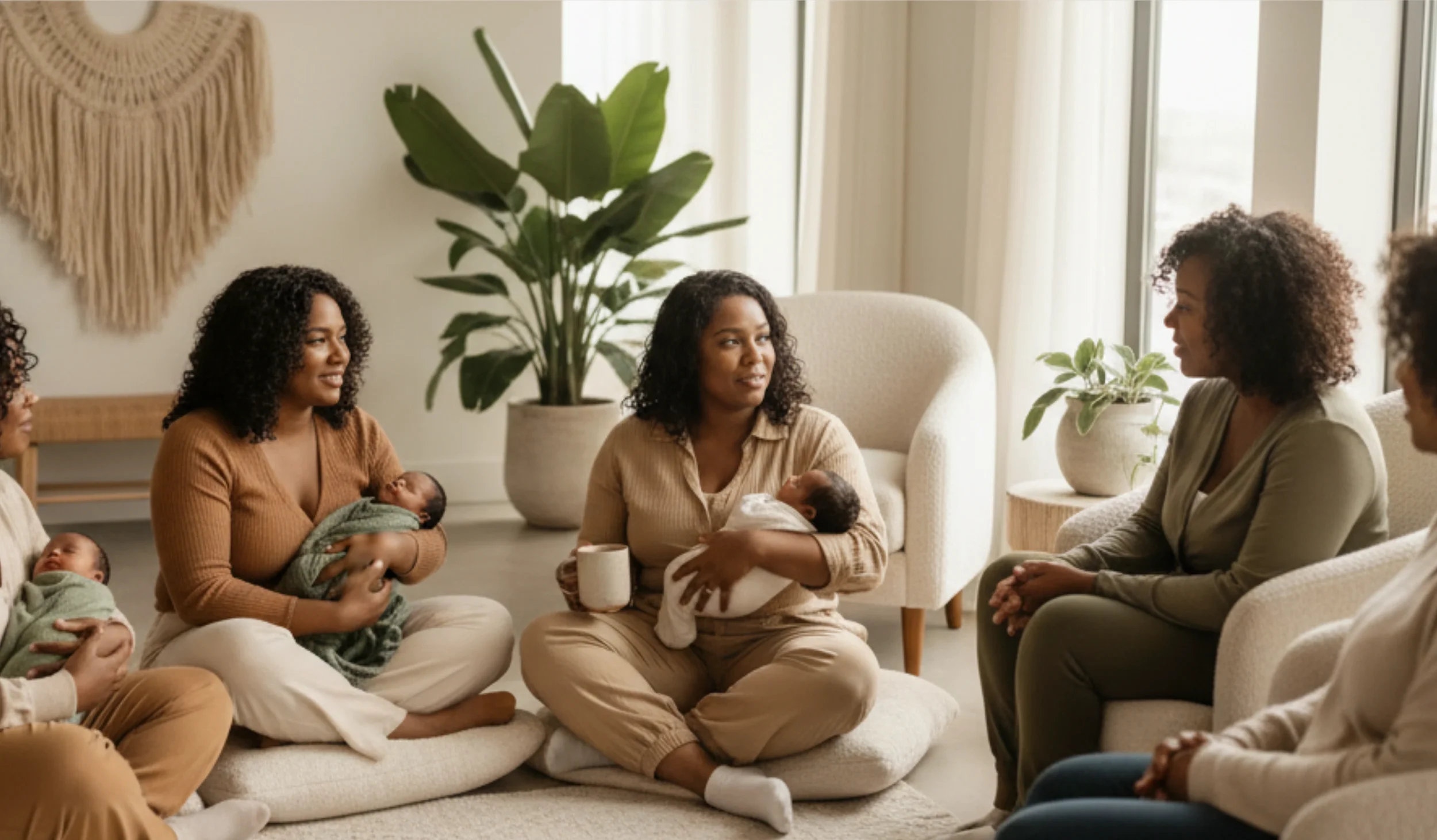
You Were Not Meant to Do This Alone
Finding a support group that actually fits means finding one that was designed with you in mind. This post walks through why culturally affirming support groups matter for Black mothers, what to look for when searching, and where to find spaces that will meet you where you are, including the community-based support offered through Black Girls Mental Health Collective.
Why Black Mothers Need Culturally Affirming Support
Research consistently shows that Black women experience higher rates of perinatal mood and anxiety disorders than their white counterparts, yet receive mental health care at significantly lower rates. According to the Centers for Disease Control and Prevention (CDC, 2023), Black women are two to three times more likely to die from pregnancy-related causes than white women, with the majority of those deaths being preventable. A core reason these outcomes persist is that Black women are not being heard in clinical spaces, and that silence extends into the postpartum period, when the need for community is highest.
Support groups fill a gap that clinical care alone cannot always reach. A study published in the Journal of Midwifery and Women's Health found that peer support groups reduce feelings of isolation, improve maternal mental health outcomes, and increase the likelihood that mothers will seek additional care when they need it (Dennis & Hodnett, 2007). For Black mothers specifically, the benefit of peer support compounds when the group is culturally affirming. When you do not have to explain your identity before describing your experience, the quality of support changes entirely. You spend less energy on context and more on actually healing.
Systemic factors play a direct role in why Black mothers carry more and receive less. The concept of "weathering," introduced by researcher Dr. Arline Geronimus, describes the cumulative physical and psychological toll of living under chronic racial stress (Geronimus et al., 2006). That toll does not pause after birth. Without community that understands this context, many Black mothers are left to process extraordinary stress in silence.
What to Look for in a Support Group
Not every support group will be the right fit, and knowing what to look for saves time and protects your energy. Here are the markers of a group designed to serve Black mothers:
It centers Black women specifically. General parenting groups can be valuable, but they are not built to hold race-specific stress, medical mistrust, or the cultural nuances of Black motherhood. A group that centers Black women creates a different kind of safety from the start.
It is facilitated by someone who understands the cultural context. Whether that is a licensed therapist, a trained peer facilitator, or a community leader, the person holding the space matters and should not need you to justify your experience.
It has a clear and consistent focus. Some groups center postpartum depression or anxiety. Others address birth trauma, pregnancy loss, or the general transition into motherhood. Knowing the focus helps you find a group that meets you where you are.
It meets regularly. One-time events can be meaningful, but ongoing groups build the trust and continuity that lead to real support. Consistency is part of what makes a community feel safe.
It is accessible. A support group you cannot consistently attend will not serve you. Accessibility, whether virtual, local, free, or low-cost, is part of the design, not an afterthought.
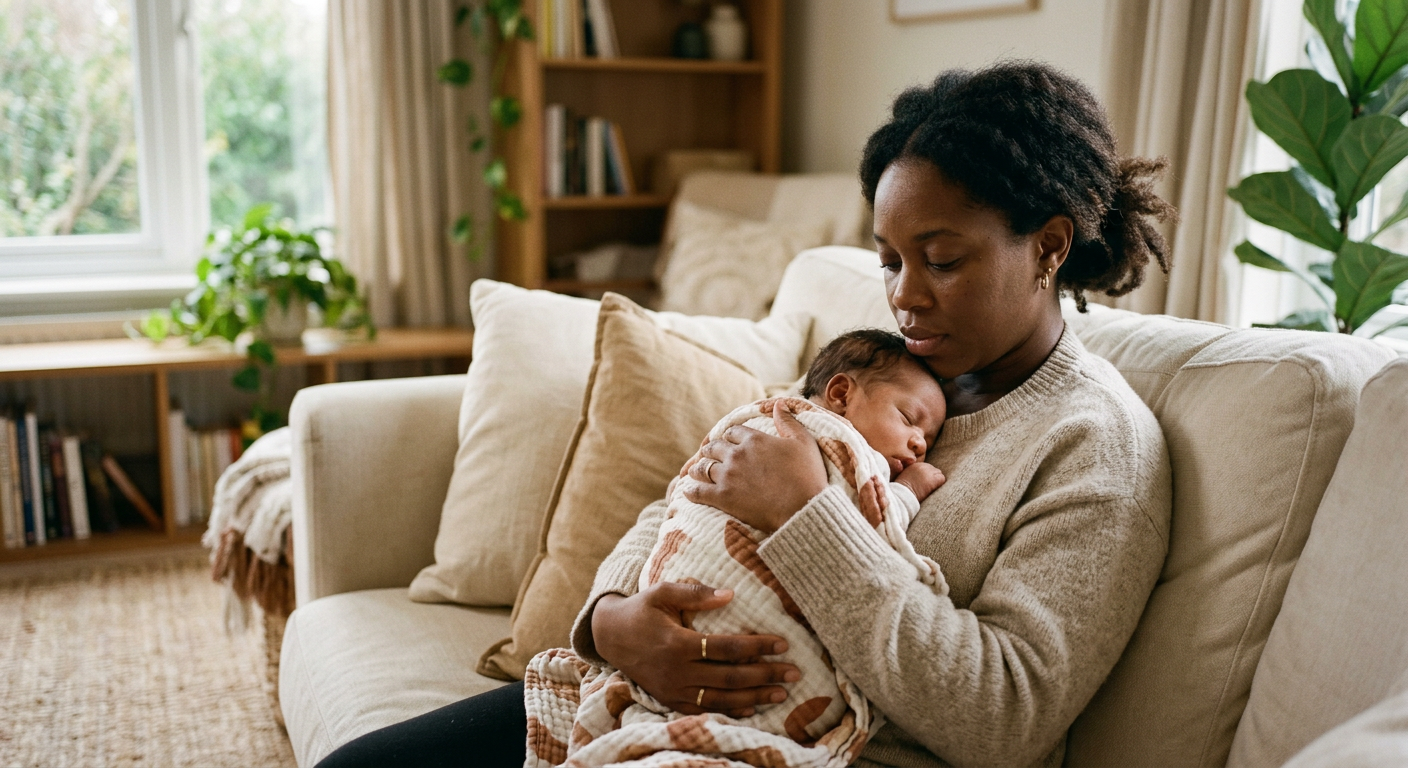
BGMHC's Support Groups for Black Mothers
Black Girls Mental Health Collective currently offers three ongoing support groups designed specifically for Black mothers at different stages of their maternal journey. Each group is expert-facilitated, held virtually so you can join from wherever life has you, and built around the understanding that Black mothers deserve a space where they do not have to explain themselves before the real conversation can start. Here is what is available right now:
Expecting Together is a drop-in support group for expecting Black mothers. Pregnancy brings a unique set of emotions, questions, and fears, and this group creates a space to move through them in community with other women who understand. Whether you are navigating anxiety about your birth experience, changes in your relationships, or simply the weight of preparing for a major life shift, Expecting Together gives you a consistent place to show up and be heard.
Rooted After Birth: A Postpartum Healing Circle for Black Mamas is designed for Black mothers in their first year after birth. The postpartum period is one of the most underserved seasons in a mother's mental health journey, and for Black women, the isolation can be especially acute. This healing circle offers community, validation, and real support during a time when many mothers feel most alone.
Soulful Rest: A Self-Care Circle for Mamas is a space centered on slowing down, restoring energy, and reclaiming moments of care for yourself. It is designed for mothers who have been pouring into everyone else and need a dedicated space to be poured into. Every session includes self-reflection, usable resources, and the kind of community that makes showing up for yourself feel less like another item on a to-do list.
All three groups meet virtually, include weekly giveaways, and are led by professionals who understand the cultural and systemic context Black mothers navigate daily. You can find your group and save your seat here.
Where Else Black Mothers Can Find Support Groups
Therapy for Black Girls
Therapy for Black Girls maintains a therapist directory and hosts community spaces, including group programming for Black women across a range of mental health topics. Their platform was built to make mental health care more accessible and less intimidating for Black women at every stage of life.
Black Mamas Matter Alliance
Black Mamas Matter Alliance focuses on maternal health advocacy and community building. Their network connects Black mothers to resources, research, and community spaces that center Black maternal wellbeing from pregnancy through the postpartum period.
Postpartum Support International
Postpartum Support International (PSI) maintains a directory of support groups organized by location, language, and focus area. While not exclusively for Black mothers, PSI has worked to expand culturally specific resources and their directory includes groups led by and for Black women.
When a Support Group Is Not Enough
Support groups are powerful, and they are not a replacement for clinical care when clinical care is what is needed. If you are experiencing persistent symptoms of postpartum depression, anxiety, birth trauma, or Postpartum PTSD, a support group can be part of your care plan alongside therapy, not instead of it. The American College of Obstetricians and Gynecologists (ACOG, 2018) recommends routine mental health screening during and after pregnancy, noting that early intervention leads to significantly better outcomes for both mother and child. The two approaches work well together: therapy provides a private, structured space to go deeper, while a support group provides ongoing community and connection throughout the healing process.
BGMHC offers both. Their perinatal mental health therapy services are available for clients in California and Georgia, and their support groups are open to Black mothers across the country. If you are not sure where to start, reach out directly and their team will help you find the right fit.
Finding Community Is an Act of Strength
Seeking support does not mean something is wrong with you. It means you understand that what you are carrying is heavy and that carrying it alone is not the only option. Black mothers have always built community as a form of survival and care. Finding a support group that was designed for you is a continuation of that tradition, not a departure from it.
There are spaces designed specifically for Black mothers, spaces where your experience is already understood before you say a word. Black Girls Mental Health Collective exists to be one of those spaces. Explore their support groups, read more on our blog, or reach out directly to find out what is available to you right now. You deserve support that actually fits, and it is closer than you think.