Feeling Like Roommates? How to Reconnect When Emotional Distance Creeps Into Your Relationship
Here is something a lot of couples will not say out loud: they love each other, but somewhere along the way they stopped actually finding each other. They share a home, split the bills, handle the kids, and somewhere in the middle of all of it, the connection that used to feel easy started requiring effort neither of them had left to give.
If that sounds like your relationship right now, what you are experiencing has a name, it is more common than people talk about, and it does not mean you are too far gone.

When you share a life but still feel miles apart, emotional disconnection in relationships is more common than people talk about.
What Emotional Disconnection in a Relationship Actually Feels Like
Emotional disconnection rarely shows up with a grand announcement. It grows quietly, built from moments of missed communication, unaddressed needs, and unresolved conflicts that stack up over time until one day you look up and realize the intimacy that used to feel effortless now takes real work to find.
The signs are subtle enough that many couples dismiss them for years. Entire evenings pass without a single real conversation. You sleep next to someone and still feel alone. You realize you share more details about your day with a coworker than with your partner. The affection between you has become transactional: a quick kiss before work, a goodnight that feels more obligatory than warm.
Gradually, without either person meaning for it to happen, couples begin relying on each other less. Less talking, less physical closeness, less vulnerability. The relationship is still there on paper. The felt sense of partnership has quietly slipped away.
Why Couples Feel Emotionally Disconnected, and Why It Is Not Your Fault
There is no single cause. For some couples, emotional distance starts with unresolved conflict that never fully got addressed. One or both partners began pulling back to protect themselves, and over time that withdrawal hardened into a pattern. Research shows that stonewalling, withdrawing from interaction, suppressing emotional expression, and refusing to engage during moments of stress deprive couples of the opportunity to resolve conflict or stay connected through difficulty. What starts as self-protection slowly becomes the default way of relating.
For others, the disconnection has nothing to do with conflict at all. It comes from exhaustion. From the complete reorientation of life that happens when a baby arrives. Two people who were once focused on each other suddenly find themselves focused entirely on a third person who needs everything from both of them. The relationship gets placed on hold, then further hold, then somewhere so far back in the queue that neither person can remember what it felt like before.
Research consistently finds that women report higher levels of emotional disconnection and emotional loneliness within romantic relationships than their male partners. For Black women especially, who are already carrying layers of stress, cultural expectations, and the pressure to be the strong one, the weight of that disconnection often gets carried silently. You keep going. You hold it together. You pour into everyone else. And somewhere underneath all of that, you wonder if you and your partner will ever find your way back to each other.
What Happens When Emotional Disconnection Goes Unaddressed
Emotional disconnection does not stay neatly inside the relationship. Without an emotional connection and affection from a partner, loneliness can develop even when physically together. You can share a bed with someone and still feel completely unseen by the person who is supposed to know you best.
Over time, that kind of loneliness takes a real toll. It shows up as irritability, low-grade sadness, emotional numbness, or a growing sense of resentment that neither partner fully understands. It affects how you parent, how you show up at work, and how you feel about yourself. A disconnected relationship does not stay in its own compartment. It leaks into everything.
Researchers agree that high levels of romantic disengagement represent a stage of relationship decline from which few couples recover without intervention. Growing apart, lack of love, and lack of affection are among the most frequently cited reasons couples give for eventual separation. Waiting and hoping the distance resolves on its own is not a strategy. It is just more waiting.
The Questions Couples Are Afraid to Ask Out Loud
The questions that sit heaviest in a disconnected relationship are rarely dramatic. They are quiet, private, and often tinged with guilt for even having them.
Is this fixable, or have we waited too long?
Is what I am feeling normal, or is something genuinely wrong with us?
Do I still love my partner, or have I just gotten used to them?
These are not signs of a failing relationship. They are signs of someone paying close attention.
Most couples who feel emotionally disconnected are not falling out of love. They are buried under the accumulated weight of unmet needs, unexpressed frustrations, and a rhythm of daily life that slowly crowded out the parts of their relationship that used to sustain them. The feelings did not disappear. They just stopped having anywhere to go.
The question of whether it is too late is what keeps most people from taking the first step toward getting help. Research and experience both show that couples who are still asking that question are almost never past the point of repair. The couples who make the most progress are not the ones whose relationships are in the best shape. They are the ones who decided that what they had was worth fighting for before they ran out of reasons to try.
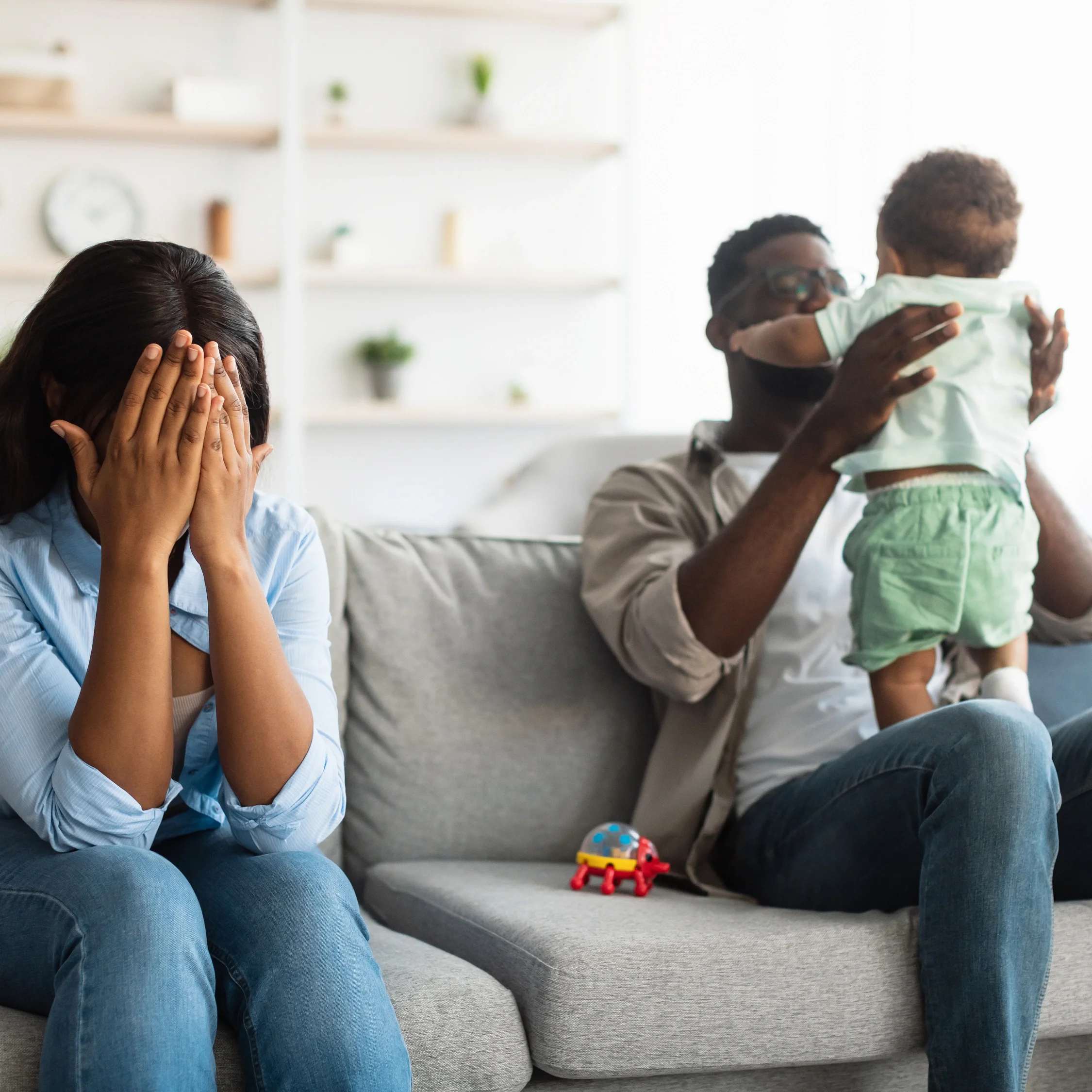
Emotional Disconnection After Having a Baby
For couples in the postpartum period, emotional disconnection can feel especially disorienting. You brought this baby into the world together. You love each other. The distance between you still feels wider than it ever has, and the guilt of that can be its own kind of grief.
This is more common than people talk about. A staggering 85 percent of new mothers report feeling simultaneous joy for their newborns and profound grief for the intimacy they once shared with their partners. The transition into parenthood is one of the most significant identity shifts a person goes through, and it happens to both partners at the same time, in different ways, with almost no space to process it together.
One partner may be physically recovering and hormonally adjusting while quietly mourning the version of herself that existed before. The other may be feeling sidelined, unsure of their role in a bond they are watching form between mother and baby, carrying their own silent grief for the partner they feel like they have lost access to. Both are running on very little sleep, very little time alone, and very little of the connection that once sustained them. Without support, many couples quietly drift in a direction they never intended to go.
For Black women navigating all of this without enough culturally responsive support, the pressure to hold it together can make it nearly impossible to voice what they actually need. This often creates a silent expectation that partners will instinctively understand and adapt, a hope that research shows only about 40 percent of women find to be met in reality. That gap between what you need and what gets offered is where resentment quietly takes root.
If postpartum depression or anxiety is also part of what you are carrying, that weight makes the relational distance even harder to bridge on your own. Getting support for both is not doing too much. It is doing exactly enough.
The Bringing Baby Home program was designed for exactly this season. It helps couples navigate the emotional complexity of new parenthood together, build communication skills, reconnect as partners, and create a foundation that supports both the relationship and the baby. Getting support early is not a sign that your relationship is failing. It is what gives your relationship a real chance to thrive through this shift.
How to Reconnect With Your Partner After Feeling Emotionally Distant
Real reconnection requires more than a date night or a good conversation, though both matter. It requires understanding why the distance developed, learning new ways to communicate emotional needs, especially for couples who never had strong models for that growing up, and finding a space where both partners feel safe enough to be vulnerable again.
A good place to start is the honest conversation you have both been putting off. Talk about how you will support each other. Name what you have been carrying alone. Regular check-ins, even brief ones, keep couples from drifting back into autopilot. And when those conversations feel too big or too charged to have without support, that is exactly what couples therapy is designed for.
A 2024 study found that cognitive-behavioral couple therapy significantly increases marital intimacy and satisfaction, with nearly 38 percent of changes in marital intimacy directly attributable to therapeutic intervention. Approaches like CBT therapy and Emotionally Focused Therapy help partners identify the emotional patterns driving their distance and rebuild secure attachment. Couples who seek support while the connection is strained but not yet severed move faster and further than those who wait until things feel beyond repair.
You Do Not Have to Wait Until It Feels Urgent
Seeking support is not an admission that your relationship is broken. It is what you do when you love something enough to protect it before it breaks.
Couples therapy at Black Girls Mental Health Collective is designed for Black women and their partners who want to address emotional distance before it becomes the whole story. Whether you are navigating postpartum changes, years of accumulated distance, or simply a season where you have lost sight of each other, therapy creates the kind of supported space where real conversations can happen and two people can find their way back to each other with guidance from someone who genuinely understands what you are carrying.
You are not alone in this. Your relationship is more resilient than the distance makes it feel. And if you are not sure where to start, booking a free consultation is the simplest first step.
Can a Relationship Recover From Emotional Disconnection?
Yes. If a couple was at one point emotionally connected, they can become emotionally connected again. It requires trust, bravery, a willingness to try, and a refusal to keep tolerating what they have grown accustomed to. That last part is the hardest. The distance, over time, stops feeling like a problem and starts feeling like just the way things are.
It does not have to stay that way.
The version of your relationship you are quietly grieving, the ease, the closeness, the feeling of being truly known by someone, is not necessarily gone. Sometimes it is waiting just on the other side of the conversation you have not been able to have yet. With the right support, that conversation becomes possible.